
What Is a Moisturiser for Men?
A moisturiser for men is a skincare product designed to hydrate the skin, strengthen the skin barrier, reduce water loss, and improve texture. It helps control dryness, balance sebum production, and protect against environmental stress.
In simple terms: it keeps your skin healthy, smooth, and resilient.
Do Men Really Need Moisturiser?
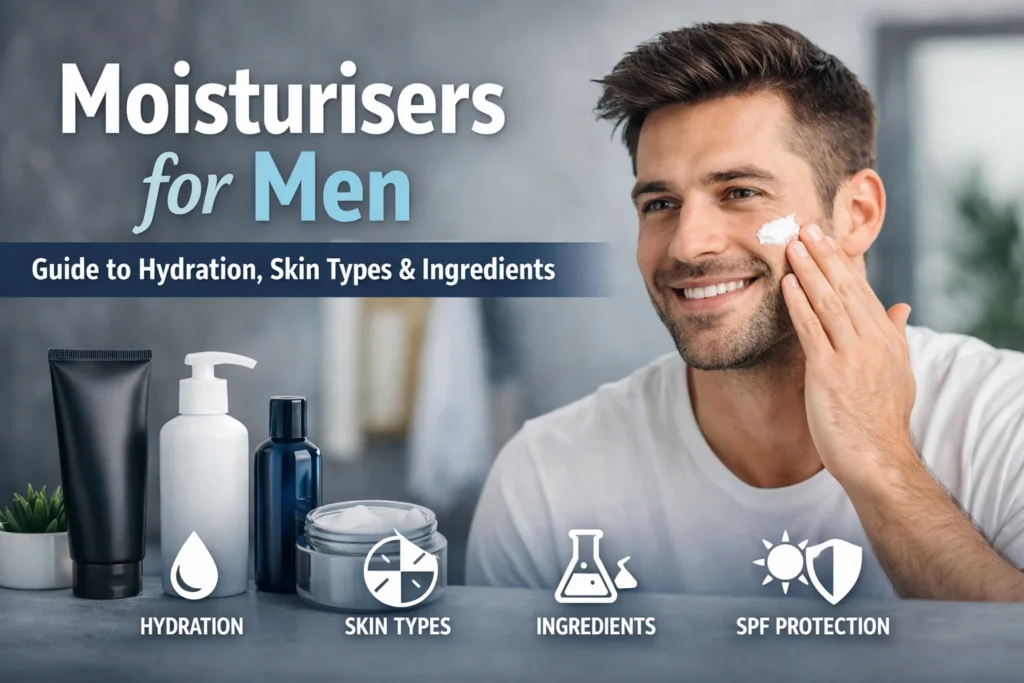
Yes. Male skin is thicker and produces more oil due to testosterone, but it still loses moisture and experiences barrier damage. Without hydration, skin can become irritated, dull, or prematurely aged.
Even oily skin needs moisturiser just the right type.
Why Moisturising Matters for Male Skin
Men’s skin differs in key ways:
- 20–25% thicker on average
- Higher sebum production
- Larger pores
- Frequent shaving damage
- Often less daily SPF use
These factors increase the need for proper hydration and barrier support.
The Skin Barrier Explained
The skin barrier is the outer protective layer that prevents water loss and blocks irritants. When damaged:
- Redness increases
- Acne worsens
- Fine lines appear sooner
- Skin feels tight or flaky
Ingredients like ceramides, glycerin, and hyaluronic acid help repair and maintain this barrier.
Types of Moisturisers for Men
Different skin types require different formulations.
1. Gel Moisturiser
Best for: Oily or acne-prone skin
Texture: Lightweight, water-based
Benefits: Fast absorption, non-greasy
2. Lotion
Best for: Normal to combination skin
Texture: Light cream
Benefits: Balanced hydration
3. Cream
Best for: Dry or mature skin
Texture: Thick, rich
Benefits: Deep hydration, barrier repair
4. Balm
Best for: Very dry or winter skin
Texture: Heavy
Benefits: Intense moisture retention
5. SPF Moisturiser
Best for: Daily protection
Includes: Broad-spectrum UV protection (SPF 15–50)
Gel vs Cream: Which Should You Choose?
| Feature | Gel | Cream |
|---|---|---|
| Skin Type | Oily | Dry |
| Absorption | Very fast | Slower |
| Finish | Matte | Rich |
| Acne Risk | Lower | Higher (if heavy) |
| Climate Suitability | Humid | Cold/Dry |
If you live in humid climates like Singapore or Miami, gel works better.
In colder regions like Canada or Northern Europe, cream provides stronger barrier protection.
How to Choose the Best Moisturiser for Men (Step-by-Step)
Step 1: Identify Your Skin Type
- Oily → Shine, clogged pores
- Dry → Flaky, tight feeling
- Combination → Oily T-zone
- Sensitive → Redness, stinging
- Acne-prone → Frequent breakouts
Step 2: Check the Ingredient List
Look for:
- Hyaluronic Acid (hydration magnet)
- Ceramides (barrier repair)
- Niacinamide (oil control + redness reduction)
- Glycerin (moisture retention)
- Salicylic Acid (acne support)
- Retinol (anti-aging, night use only)
Avoid heavy alcohols if sensitive.
Step 3: Match to Climate
- Tropical climates → Lightweight, oil-free
- Desert climates → Barrier-repair creams
- Cold winters → Thick cream with ceramides
- High UV areas → SPF 30+ daily
Step 4: Decide Your Budget
Budget Range: $5–$15
Mid-Range: $15–$40
Premium: $40–$100+
Expensive isn’t always better. Ingredient quality and formulation matter more than branding.
How to Apply Moisturiser Properly
- Cleanse face with a gentle cleanser
- Pat dry (do not rub aggressively)
- Apply a pea-sized amount
- Spread evenly using upward strokes
- Use sunscreen if moisturiser lacks SPF
Use twice daily morning and night.
After shaving, apply moisturiser immediately to reduce irritation and support post-shave care.
Can Moisturiser Cause Acne?
Yes, if it is:
- Heavy
- Comedogenic
- Too rich for your skin type
Choose oil-free and non-comedogenic formulas if acne-prone.
Why Oily Skin Still Needs Moisturiser
When skin lacks hydration, it compensates by producing more sebum. That can worsen breakouts.
Lightweight hydration actually helps balance oil production.
Anti-Aging & Collagen Support
Moisturisers alone do not rebuild collagen, but they:
- Improve skin elasticity
- Reduce fine lines from dehydration
- Support active ingredients like retinol
For aging skin, look for:
- Retinol (night use)
- Peptides
- Niacinamide
- SPF during the day
Moisturiser vs Sunscreen: Do You Need Both?
An SPF moisturiser combines hydration and sun protection. However:
- For intense sun exposure, dedicated sunscreen is stronger.
- SPF must be broad-spectrum to protect against UVA and UVB.
Daily UV protection is one of the most effective anti-aging tools available.
Over-Moisturising: Is It a Real Problem?
Yes. Signs include:
- Congested pores
- Milia (tiny white bumps)
- Excess shine
- Breakouts
Stick to a pea-sized amount and adjust by season.
Global Buying Considerations
Search trends show users look for:
- “Best moisturiser for men near me”
- “Dermatologist recommended moisturiser in [City]”
- “Men’s face cream price in [Country]”
Where to Buy
- Local pharmacy
- Dermatology clinic
- Grooming store
- Online marketplace
In urban areas like London, New York, Dubai, or Sydney, premium options are widely available.
In smaller cities, pharmacy brands often provide reliable mid-range options.
What Dermatologists Recommend
Most dermatologists emphasize:
- Non-comedogenic formulas
- Fragrance-free for sensitive skin
- Broad-spectrum SPF
- Patch testing before full use
A cosmetic chemist would also advise checking ingredient order higher concentration ingredients appear earlier on the label.
Men’s vs Women’s Moisturiser: Is There a Difference?
Mostly marketing.
Men’s products often:
- Have lighter textures
- Have neutral scent
- Target oil control
You can use either choose based on skin type, not label.
Ingredient Interaction Insights
- Niacinamide pairs well with hyaluronic acid.
- Retinol should not be combined with strong exfoliating acids unless guided by a professional.
- Salicylic acid suits acne-prone skin but may dry sensitive types.
Layering order matters: cleanser → serum → moisturiser → sunscreen.
Pros & Cons of Using Moisturiser
Pros
- Prevents dryness
- Supports skin barrier
- Reduces irritation
- Improves shaving comfort
- Slows visible aging
Cons
- Wrong formula can cause breakouts
- Overuse may clog pores
- Some premium brands overpriced
Quick Decision Tree
If your skin is oily → Choose gel, oil-free, non-comedogenic.
If your skin is dry → Choose cream with ceramides.
If sensitive → Fragrance-free, dermatologist-tested.
If aging → Night cream with retinol + daily SPF.
If humid climate → Lightweight formula.
If winter climate → Thick barrier cream.
How Much Does Men’s Moisturiser Cost?
Globally, pricing varies:
- Drugstore brands: Affordable and effective
- Dermatology brands: Mid-range
- Luxury brands: Premium pricing
Always compare ingredient quality before price.
FAQs
What is the best moisturiser for men?
The best moisturiser depends on skin type. Oily skin benefits from gel formulas, dry skin needs creams, and all skin types should use SPF during the day.
Should men moisturise daily?
Yes. Apply moisturiser twice daily to maintain hydration and support the skin barrier.
What moisturiser is best for oily skin?
Choose an oil-free, lightweight, non-comedogenic gel with niacinamide or salicylic acid.
Can men use women’s moisturiser?
Yes. Skin type matters more than gender labeling.
Is moisturiser necessary in summer?
Yes. Even in humid weather, skin loses moisture and needs hydration. Choose lighter textures.
How much moisturiser should I use?
A pea-sized amount for the face is sufficient.
What ingredient is best for hydration?
Hyaluronic acid and glycerin are excellent for attracting and retaining moisture.
Does moisturiser prevent wrinkles?
It reduces dehydration lines and supports anti-aging routines but does not stop aging entirely.
Conclusion
Moisturisers for men are not optional extras they are foundational skincare tools. Whether your goal is clearer skin, oil control, anti-aging, or post-shave comfort, the right formulation makes a measurable difference.
Identify your skin type. Consider your climate. Check ingredients. Use daily SPF. Apply consistently.
Healthy skin is not about complexity. It is about choosing wisely and staying consistent.