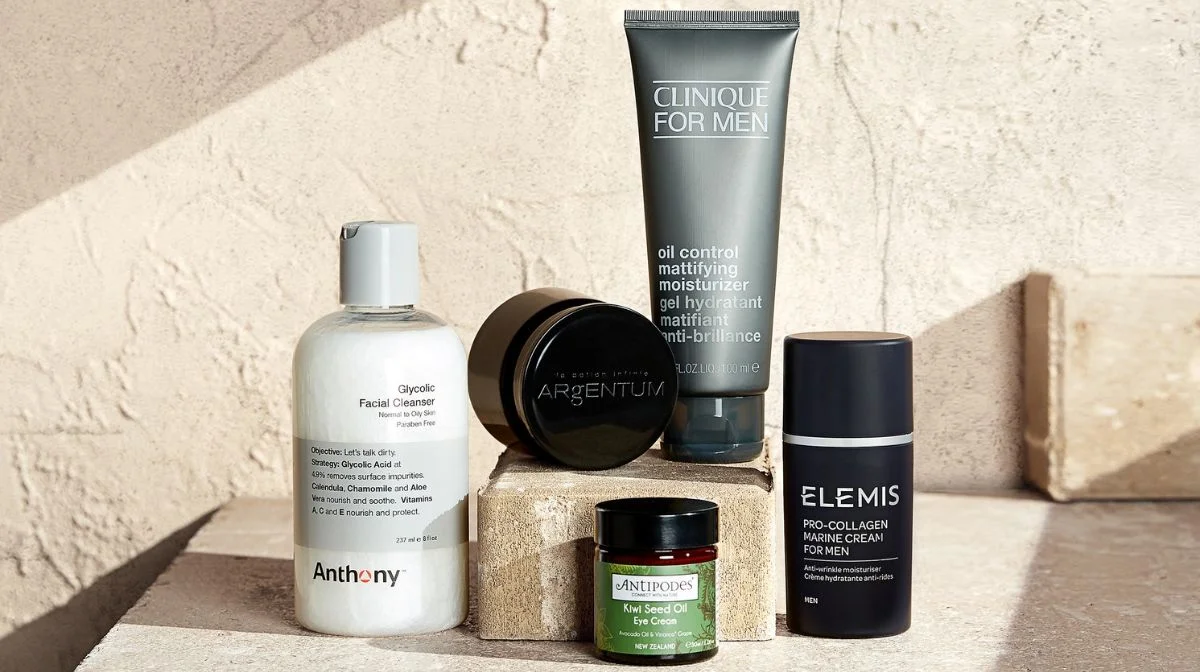
Choosing facial moisturiser for men isn’t about picking the most expensive bottle or the one with the strongest scent. It’s about matching product chemistry to your skin biology, climate, and daily routine.
The best moisturiser for men depends on skin type, environment, and specific concerns like acne, dryness, shaving irritation, or aging. Once you understand how hydration, sebum control, and barrier repair work, choosing becomes simple.
This guide walks you through exactly how to choose moisturiser for men step by step.
Why Men Need Facial Moisturiser
Men’s skin is biologically different. Higher testosterone levels lead to:
- Thicker dermis
- Increased sebum production
- Larger pores
- Frequent shaving irritation
Without moisturiser, the skin barrier weakens. This increases trans-epidermal water loss (TEWL), which leads to dryness, excess oil production, and breakouts.
Hydration supports:
- Skin barrier repair
- Oil balance
- Reduced irritation
- Smoother texture
- Slower visible aging
Skipping moisturiser often causes the very problems men try to avoid greasy shine and acne.
Step 1: Identify Your Skin Type (3-Minute Test)
Before buying anything, determine your skin type.
Quick Skin Type Test:
- Wash your face with a gentle face cleanser.
- Wait 60 minutes without applying anything.
- Observe how your skin feels.
| Skin Condition | Likely Type |
|---|---|
| Tight, flaky, rough | Dry |
| Shiny everywhere | Oily |
| Oily T-zone, dry cheeks | Combination |
| Red, itchy, reactive | Sensitive |
| Comfortable, balanced | Normal |
This step prevents 90% of wrong purchases.
Step 2: Match Ingredients to Your Skin Needs
Understanding ingredients makes choosing facial moisturiser for men far easier.
Hydration (Humectants)
These attract water into the skin:
- Hyaluronic Acid
- Glycerin
- Aloe Vera
Best for: Dehydrated, combination, and oily skin.
Barrier Repair (Emollients + Occlusives)
These strengthen the skin barrier and reduce TEWL:
- Ceramides
- Squalane
- Shea Butter
Best for: Dry or cold-climate skin.
Oil Control & Acne Support
- Niacinamide (sebum control + anti-inflammatory)
- Salicylic acid (exfoliation for acne-prone skin)
- Green tea extract
Best for: Oily, acne-prone skin.
Always check for non-comedogenic labeling to reduce pore-clogging risk.
Anti-Aging Support
- Retinol (night use only)
- Peptides
- Vitamin C (morning antioxidant)
Best for: Men over 30 or those concerned about fine lines.
If you’re new to retinol, start slowly and patch test first.
Gel vs Cream Moisturiser: Which Is Better?
The answer depends on skin type and climate.
| Feature | Gel Moisturiser | Cream Moisturiser |
|---|---|---|
| Texture | Lightweight | Thick |
| Best For | Oily / Acne-Prone | Dry / Mature |
| Finish | Mattifying | Rich |
| Climate | Humid / Tropical | Cold / Winter |
If you live in a humid climate like Southeast Asia or coastal regions, choose oil-free gel formulas.
If you live in cold weather regions, a richer cream prevents winter dryness.
Does SPF Moisturiser Replace Sunscreen?
For daily indoor use, an SPF moisturiser (SPF 30+) can be sufficient.
However:
- For outdoor sports
- Beach exposure
- High UV regions
Use a dedicated sunscreen in addition to moisturiser.
SPF is the most effective anti-aging tool available.
Morning vs Night Moisturiser
Morning Routine
- Lightweight formula
- Oil control
- SPF protection
Night Routine
- Barrier repair ingredients
- Retinol (if tolerated)
- Slightly richer texture
Men should moisturise twice daily for optimal results.
Climate Matters More Than You Think
Your environment directly affects skin hydration.
Humid Climate (Tropical Regions)
- Use lightweight, mattifying formulas
- Avoid heavy occlusives
- Focus on niacinamide for oil control
Cold Climate (Winter Regions)
- Increase ceramides and squalane
- Use cream-based moisturisers
- Night repair creams recommended
High Pollution Urban Areas
- Add Vitamin C
- Strengthen barrier protection
- Consider antioxidant moisturisers
Climate adaptation is one of the most overlooked factors when choosing facial moisturiser for men.
Shaving, Beard & Moisturiser
Frequent shaving disrupts the skin barrier.
Moisturiser helps reduce:
- Razor burn
- Inflammation
- Redness
If you have a beard:
- Apply moisturiser to skin underneath.
- Follow with beard oil.
- Avoid heavy pore-clogging oils.
Aftershave balm and moisturiser can complement each other they serve different purposes.
How to Choose Moisturiser for Men (Decision Framework)
Follow this 5-step method:
1. Identify Skin Type
Identify if your skin is oily, dry, combination, sensitive, or normal.
2. Define Main Concern
Acne? Dryness? Aging? Sensitivity?
3. Match Texture
Gel, lotion, or cream?
4. Check Key Ingredients
Look for humectants, ceramides, niacinamide as needed.
5. Patch Test
Apply to jawline for 24 hours before full use.
This structured approach eliminates guesswork.
What Ingredients Should Men Avoid?
- High alcohol content (drying)
- Heavy fragrance (irritation risk)
- Coconut oil (may be pore-clogging for acne-prone skin)
- Strong essential oils
Sensitive skin should always choose fragrance-free formulas.
Pricing: How Much Should You Spend?
Moisturiser pricing varies globally.
| Tier | Price Range | Who It’s For |
|---|---|---|
| Budget | $8–20 | Basic hydration |
| Mid-Range | $20–45 | Balanced ingredients |
| Premium | $50–100+ | Advanced formulations |
Expensive doesn’t always mean better. Ingredient quality and formulation matter more than branding.
Can Men Use Women’s Moisturiser?
Yes, technically. Skin structure is similar.
However, men often prefer:
- Lighter textures
- Matte finishes
- Lower fragrance
It’s about skin type, not gender labeling.
Common Mistakes Men Make
- Using body lotion on the face
- Skipping moisturiser because skin is oily
- Ignoring SPF
- Overusing retinol
- Not adjusting for climate
Most breakouts come from poor product matching, not moisturiser itself.
Professional & B2B Perspective
For barbershops, dermatology clinics, and grooming brands:
- Offer non-comedogenic moisturisers post-shave
- Stock gel + cream options for skin type variety
- Educate clients on patch testing
- Recommend dermatologist consultation for severe acne
Men’s professional skincare demand continues growing globally.
Quick Checklist Before Buying
✔ Matches skin type
✔ Suitable for your climate
✔ Non-comedogenic
✔ Contains hydration + barrier ingredients
✔ Fragrance-free (if sensitive)
✔ SPF included (for daytime)
✔ Within your budget
Frequently Asked Questions
Which moisturiser is best for men?
The best moisturiser depends on skin type. Oily skin benefits from lightweight gel formulas, while dry skin requires cream-based moisturisers with ceramides.
How often should men moisturise?
Twice daily once in the morning and once at night after cleansing.
Should oily skin use moisturiser?
Yes. Skipping moisturiser can increase sebum production and worsen acne.
What does non-comedogenic mean?
It means the product is formulated to reduce the risk of clogged pores.
Is SPF moisturiser enough?
For light daily exposure, yes. For intense sun exposure, use additional sunscreen.
Can moisturiser reduce wrinkles?
It improves appearance by hydrating skin, but retinol and SPF provide stronger anti-aging benefits.
How long does it take to see results?
Hydration is immediate. Barrier repair may take 2–4 weeks.
What is the best moisturiser for men with acne-prone skin?
Look for oil-free, lightweight, gel-based moisturisers with niacinamide or salicylic acid.
Conclusion
Choosing facial moisturiser for men becomes simple when you follow a structured approach:
- Understand your skin type.
- Adapt to your climate.
- Focus on ingredients that support hydration and barrier repair.
- Use SPF daily.
- Patch test before committing.
Hydrated skin looks healthier, feels smoother, and ages better. The right moisturiser isn’t about branding it’s about compatibility.
Start with your skin type. Adjust based on environment. Upgrade as your needs evolve.